HX-MI-09
MSc AgriTech Innovation (Research)
Two years of research on a real problem, with an industry partner, a field site and a working prototype at the end of it.
Overview
A thesis nobody can use is an expensive way to be right.
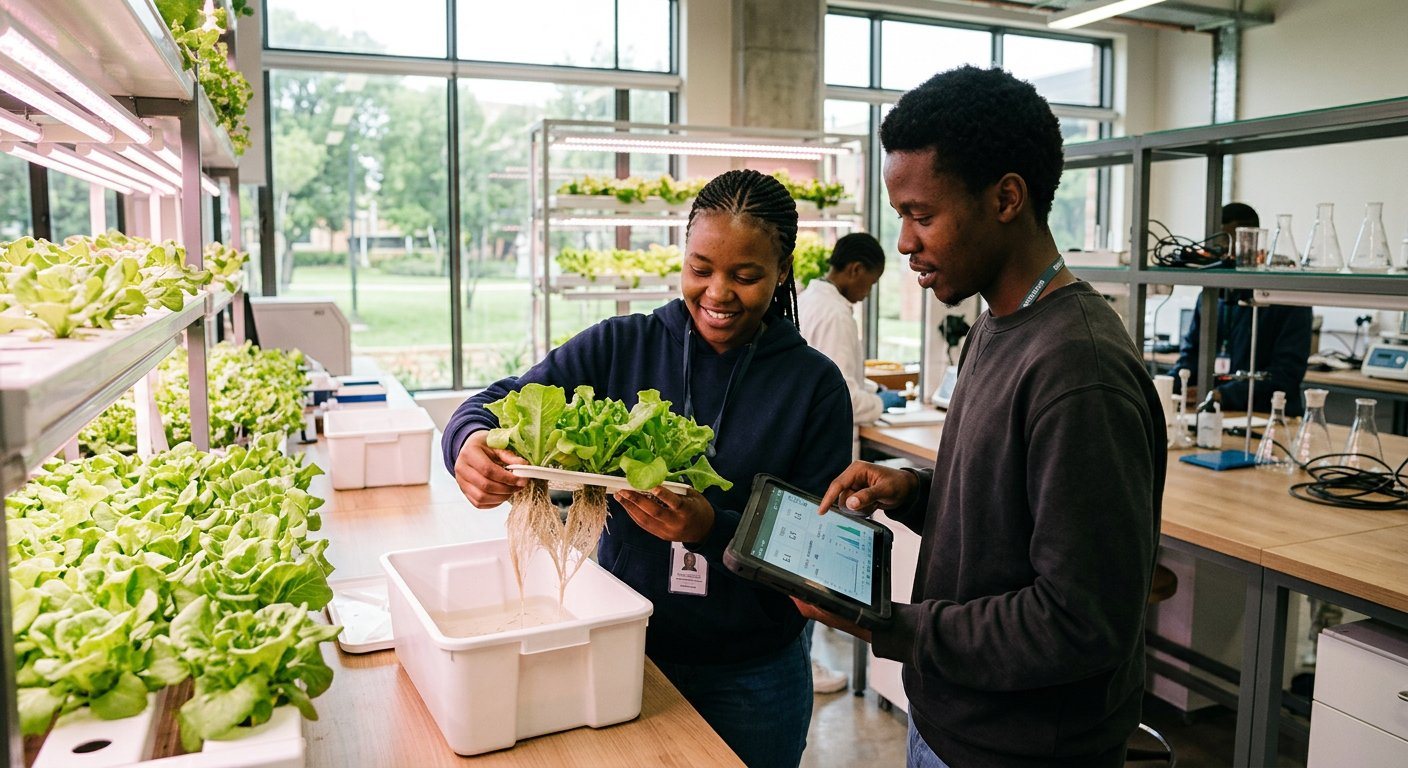
Our master’s programme is a research degree with a deployment obligation. Every candidate works with an industry partner from the first month, and the output must include something that can be used in a field: a tool, a dataset, a protocol or a decision model that survives contact with a farm manager.
Candidates join one of our four research chairs and have access to the instrumented plots, the multispectral archive and the packhouse line. Recent projects include deficit-irrigation scheduling for table grapes, drone-based yield forecasting with calibrated ground truth, and cold-chain risk modelling for exports to the EU.
- Research methods, experimental design and statistical analysis
- Supervision by a chair holder and an industry co-supervisor
- Access to nine instrumented plots and eight years of imagery
- Deployment requirement: a working output, not just a thesis
- Optional teaching assistantship in the undergraduate programme
Curriculum
Two years of research
Year 1
Foundations and pilot
Research methods and scientific writing · Advanced data analysis · Literature review and proposal · Pilot study with industry partner
Year 2
Research and deployment
Full research project · Field validation · Prototype or protocol deployment · Thesis and defence · Publication and industry handover
Entry requirements
Master of Science · NQF 9
- An honours degree or four-year bachelor degree at NQF 8 in a relevant field
- Average of 65% or above in the final year of study
- Acceptance by a research chair and an industry partner
- Research proposal and interview
Where it leads
MSc AgriTech Innovation (Research)
- Research scientist in agricultural technology
- Innovation or R&D lead at an agritech company
- Technical advisor to a commodity organisation or government
- Doctoral study in agricultural science or engineering
Next step
Applications for 2027 are open
Applications close 30 September 2026 for the February 2027 intake. Late applications are considered while places remain.